
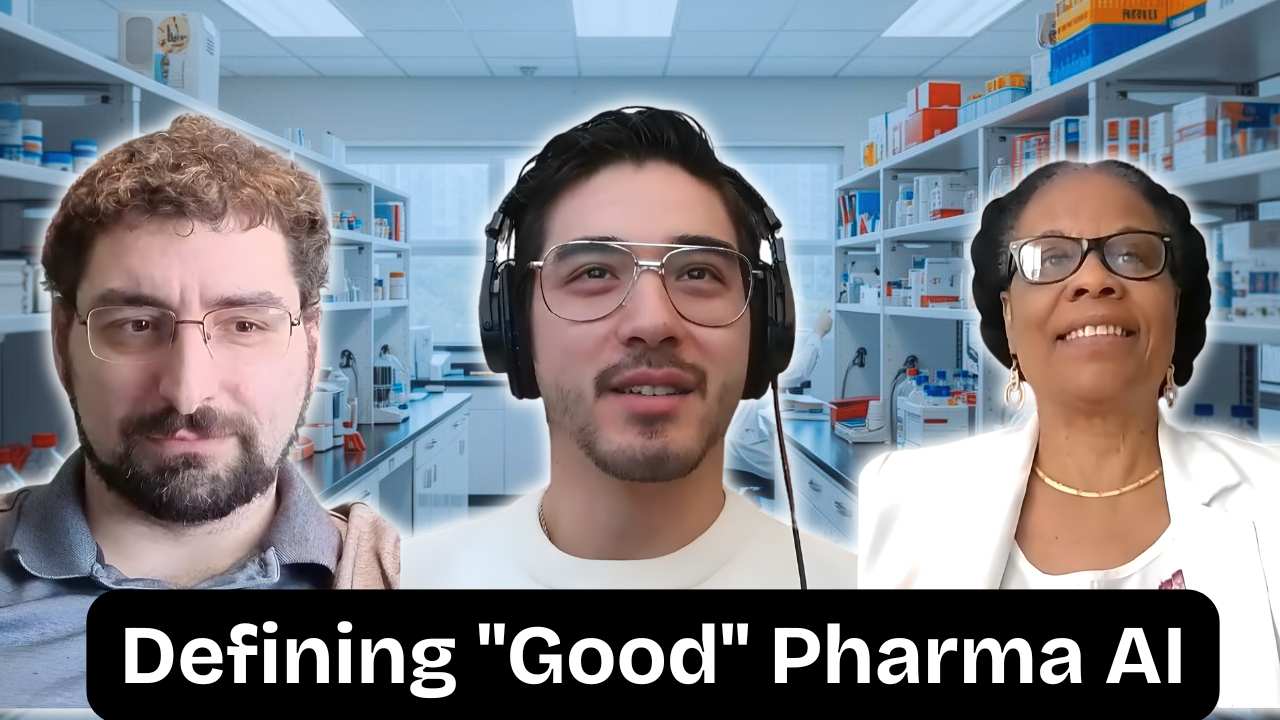
The intersection of Artificial Intelligence and drug development reached a fever pitch on January 14, 2026, when the FDA and EMA issued a rare joint announcement on guiding principles for Good AI Practice. In our latest episode, the DES Pharma team unpacks whether these high-level principles provide a true roadmap or simply a “placeholder” for an industry struggling to bridge the gap between hype and execution.
The Regulatory Signal: 10 Guiding Principles
The joint FDA/EMA statement outlines a risk-proportionate framework intended to foster innovation while protecting drug quality and patient safety. However, as our team noted, the guidance is intentionally broad. While it emphasizes ethics and human-in-the-loop oversight, it remains silent on the granular “how-to” of validation—a significant hurdle for a technology known to “hallucinate” or fabricate data.
The Three Pillars of AI in 2026
To navigate the current landscape, we categorize AI into three distinct tiers:
-
Foundational Models: General-purpose LLMs like Gemini or Claude.
-
AI Wrappers: Industry-specific apps built on existing models (e.g., Benchling AI for lab notebooks).
-
Hybrid Models: The “Holy Grail” of pharma—sophisticated systems that combine mechanistic modeling with machine learning to provide real-time manufacturing insights and multi-site controls.
The “FAIR” Challenge: Data as the Bottleneck
The recurring theme of our discussion was the FAIR data principles: Findable, Accessible, Interoperable, and Reusable.
Me Engineering highlighted a harsh reality: no AI can fix “atrociously formatted” Excel sheets or siloed, unstructured data. For AI to move from a productivity tool to a “self-driving lab,” the industry must solve the data acquisition problem. We need a unified infrastructure where analytical instruments from different manufacturers speak the same language.
Boosting Scientist Value, Not Replacing It
Janine emphasized that AI’s true win isn’t replacing scientists, but elevating the “baseline.” In Analytical Development (AD), AI can learn from historical assay data to predict optimal parameters, drastically reducing trial-and-error iterations and saving precious materials in complex biologics and gene therapy programs.
Is your data “AI-Ready”? At DES Pharma, we help clients build the digital foundations necessary to turn regulatory intent into operational reality. Visit our website to schedule a consultation and let’s discuss how to structure your process data for the next generation of drug development.

Senior Consultant, Process Development & CMC