

TL;DR
- Short answer: Any organization whose product must satisfy a health authority, which now extends well beyond traditional drug makers.
- Highest value users: CDMOs, CROs and clinical trial sponsors, API manufacturers, emerging biotechs, device and combination product firms, cell and gene therapy platforms, and digital health developers.
- Common trigger: A first regulatory milestone, a site or process transfer, an inspection finding, or a scale-up that outpaces the quality system.
- Why it works: Consultants supply episodic, deep specialty judgment that does not justify permanent headcount.
- How to choose: Match the consultant to your modality and development phase, not to a general industry reputation.
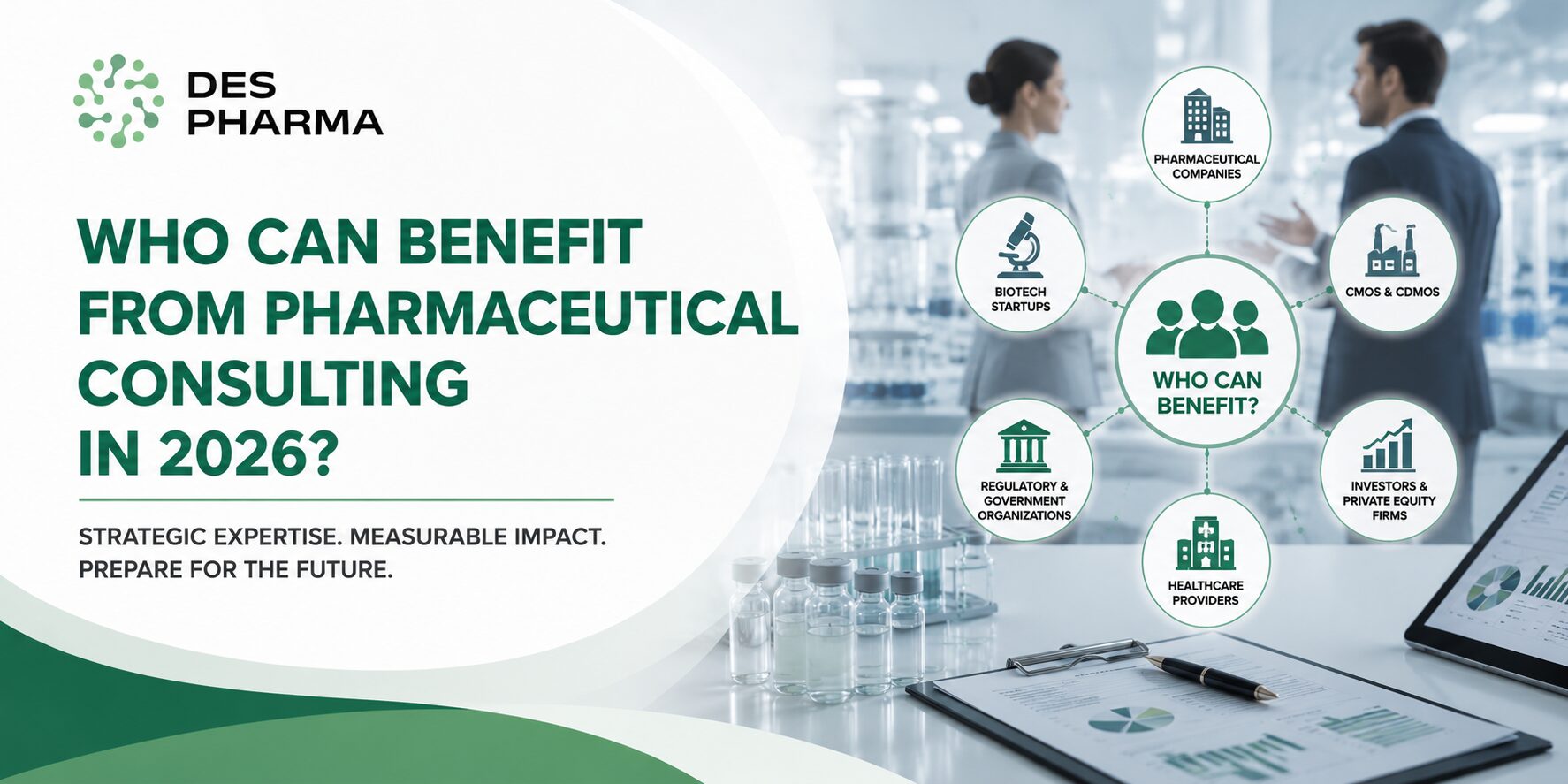
The question comes up most often from teams who assume consulting is for large manufacturers with compliance problems. In practice, the buyer base is much broader, because the regulatory perimeter has widened to cover contract manufacturers, ingredient suppliers, software developers, and platform companies that did not exist as categories twenty years ago. This guide walks through the sectors that get the most from pharma consulting, what each one typically needs, and when the timing makes sense. If your product or service ends up inside a regulated therapeutic supply chain, some version of this applies to you.
Why the Consulting Audience Has Widened
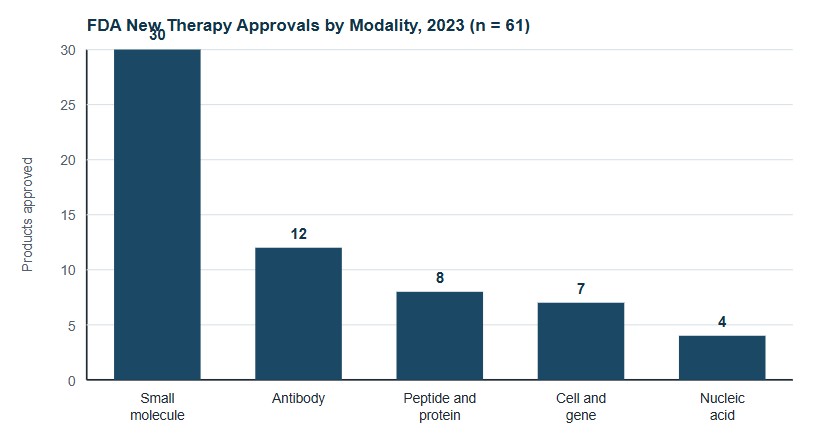
The mix of products reaching approval has shifted. Small molecules remain the largest group, but antibodies, peptides and proteins, nucleic acid therapies, and cell and gene products now account for a substantial share of new approvals each year. Each of those categories carries its own manufacturing, analytical, and regulatory expectations, and very few organizations hold deep internal expertise across more than one or two of them. That gap is what outside specialists fill.
Pharmaceutical Consulting for CDMOs
Contract development and manufacturing organizations carry the compliance burden of every client they serve, and a single observation can put multiple programs at risk. Consultants help CDMOs prepare for client audits and agency inspections, harmonize quality systems across acquired sites, and build technology transfer packages that receive processes cleanly rather than absorbing someone else’s undocumented tribal knowledge. As facilities add modalities, gap assessments against the applicable CGMP regulations become routine work. Operations teams staffing new suites frequently pair consulting support with structured biomanufacturing training so that procedures and personnel qualification advance together rather than in sequence.
Pharmaceutical Consulting for CROs & Clinical Trials
Contract research organizations and trial sponsors use consultants at the seams between clinical operations and everything upstream of them. Typical needs include protocol feasibility review, investigator site oversight, vendor qualification, data integrity remediation, and preparation for bioresearch monitoring inspections. Sponsors also bring in outside help to reconcile clinical supply forecasts with manufacturing reality, which is a recurring source of enrollment delay. Published drug development performance benchmarking from academic research centers gives sponsors an independent yardstick for cycle times, amendment rates, and site activation, which is useful when negotiating scope and timelines with a CRO partner.
Pharmaceutical Consulting for Active Pharmaceutical Ingredient (API) Manufacturers
API manufacturers operate under a distinct expectation set from finished dosage producers. Consulting support here concentrates on process validation strategy, impurity and genotoxic impurity control, starting material justification, solvent recovery controls, and drug master file preparation and maintenance. Sites supplying multiple markets need a control strategy that satisfies several regulators at once without running duplicate systems. Alignment with ICH Q7 is the anchor for most of this work, and consultants are often engaged specifically to translate that framework into site procedures that operators can follow and investigators can verify.
Pharmaceutical Consulting for Emerging Biotech Companies
Small biotechs are the clearest case for outside support, because their science is deep and their infrastructure is thin. A twenty-person company preparing a first regulatory submission needs CMC strategy, analytical development, quality system design, and vendor oversight, none of which justifies a permanent hire at that stage. Consultants also serve as the experienced counterparty when a CDMO proposes a process change the internal team is not equipped to evaluate. Companies at this stage typically engage biotech consulting support in phases, expanding scope at each financing or clinical milestone rather than building a full internal function early.
Pharmaceutical Consulting for Medical Device & Combination Products
Drug-device combinations sit across two regulatory frameworks, and firms usually have real strength in only one. Prefilled syringes, autoinjectors, inhalers, and drug-eluting implants require design controls, human factors validation, and a decision about which quality system approach applies. Consultants help determine the primary mode of action, assemble the design history file, and plan usability studies before a submission depends on them. Teams building the device side benefit from the structured biodesign process taught in academic programs, while the regulatory path follows the requirements set out for combination products.
Pharmaceutical Consulting for Cell and Gene Therapy Platforms
Advanced therapy developers face the hardest version of nearly every CMC problem: short shelf life, patient-specific batches, potency assays that resist validation, viral vector supply constraints, and comparability exercises with very limited material. Consultants support potency assay strategy, chain of identity and chain of custody design, vector manufacturing scale-up, and apheresis logistics. Because the regulatory framework for cellular and gene therapy products continues to evolve, platforms benefit from advisors who track agency thinking actively rather than relying on guidance issued several years ago.
Pharmaceutical Consulting for Software as a Medical Device (SaMD) & Digital Health
Digital health teams often arrive from software backgrounds where shipping quickly is a virtue and regulatory classification is an afterthought. That combination produces expensive surprises. Consulting work here covers determining whether a product meets the definition of Software as a Medical Device, selecting a submission pathway, building a design control and risk management system that fits an agile development cycle, planning clinical evaluation, and handling cybersecurity documentation. For products using adaptive algorithms, change management planning has to be designed before launch rather than retrofitted after the first model update.
FDA Regulatory Strategy Consulting for Biopharma
Regulatory strategy consulting answers sequencing questions: which pathway, which designations, which meetings, and what evidence must exist before each one. Practical scope includes pre-submission meeting preparation, briefing book authoring, designation requests, pediatric planning, and response strategy for information requests. The value is usually in what gets avoided, since a poorly timed meeting or a weak briefing package can cost a full development cycle. Strategy work is most effective when it stays connected to the technical program, because most regulatory questions ultimately resolve into whether the manufacturing and analytical data will support the claim being made.
GMP Compliance & Quality Assurance Consulting for Pharma Manufacturers
Established manufacturers use consultants for mock inspections, remediation after observations, quality system redesign, supplier qualification programs, data integrity assessments, and continued process verification. The recurring theme in enforcement is not exotic failure but basic system breakdown: quality unit authority, component control, written procedures, and record review. Outside reviewers see these patterns across many sites and can tell a client where its practice diverges from the norm before an investigator does. Sustained GMP compliance support tends to outperform one-off audits, because effectiveness checks only prove out over successive cycles.
Market Access & Pricing Strategy Consulting for Rare Disease Pharma
Rare disease programs face small populations, high per-patient costs, and payers who scrutinize every assumption. Consulting support covers evidence generation planning, health economic modeling, payer engagement sequencing, and coverage strategy for therapies with durable single-administration effects. The regulatory and commercial tracks interact heavily here, since orphan drug designation affects incentives, exclusivity, and negotiating position. Academic work on drug pricing policy is worth tracking during planning, because reimbursement conditions shift faster than most launch plans assume.
See How DES Pharma Works Across Modalities
FAQs About Who Can Benefit From Pharmaceutical Consulting
Is pharmaceutical consulting only for large manufacturers?
No. Small biotechs are among the heaviest users, because they need deep specialty input at specific milestones without the volume of work that would justify permanent hires. Large manufacturers use consultants differently, usually for remediation, mock inspections, and capability that sits outside their existing product experience.
When is the right time to bring in a pharmaceutical consultant?
Before the decision, not after the problem. The highest-return moments are ahead of a first submission, before a technology transfer, before a process change that could affect comparability, and immediately after an inspection finding. Engaging late usually converts an advisory task into a remediation task at higher cost.
Do medical device and digital health companies really need pharmaceutical consultants?
They need advisors fluent in the framework their product falls under. Combination products and regulated software follow device-side requirements that overlap with pharmaceutical quality expectations, so the useful consultant is one with genuine experience on both sides rather than a specialist in only one.
How do CDMOs and CROs benefit if they are already regulated service providers?
Service providers absorb risk from every client. Consultants help them harmonize quality systems across sites, prepare for client audits, strengthen technology transfer intake, and address findings without disrupting concurrent programs. Independent review also carries weight with prospective clients evaluating them.
How do I choose a consultant for my specific sector?
Match on modality and development phase first. Ask which comparable programs the named individuals personally supported, what they filed, what the agency asked, and how it resolved. General industry reputation matters far less than direct experience with products that resemble yours.
Closing Thoughts
The common thread across all ten of these sectors is not company size or maturity, it is exposure to regulatory judgment. Once a product, ingredient, service, or piece of software enters a therapeutic supply chain, someone will eventually evaluate the decisions behind it, and the quality of those decisions is easier to improve before they are made than after. Organizations that engage specialists at milestones, rather than after findings, consistently spend less and move faster. If you are trying to work out which category your program falls into and what support it actually needs, DES Pharma Consulting can help you map that against your current phase.
Follow along for practical CMC, quality, and regulatory guidance: DES Pharma on X and DES Pharma on LinkedIn.

Matt specializes in Process Development (PD) and Chemistry, Manufacturing, and Controls (CMC) strategy, helping life sciences companies navigate early-stage development, lab innovation, and technical regulatory hurdles.
Reach out to Matt on LinkedIn.